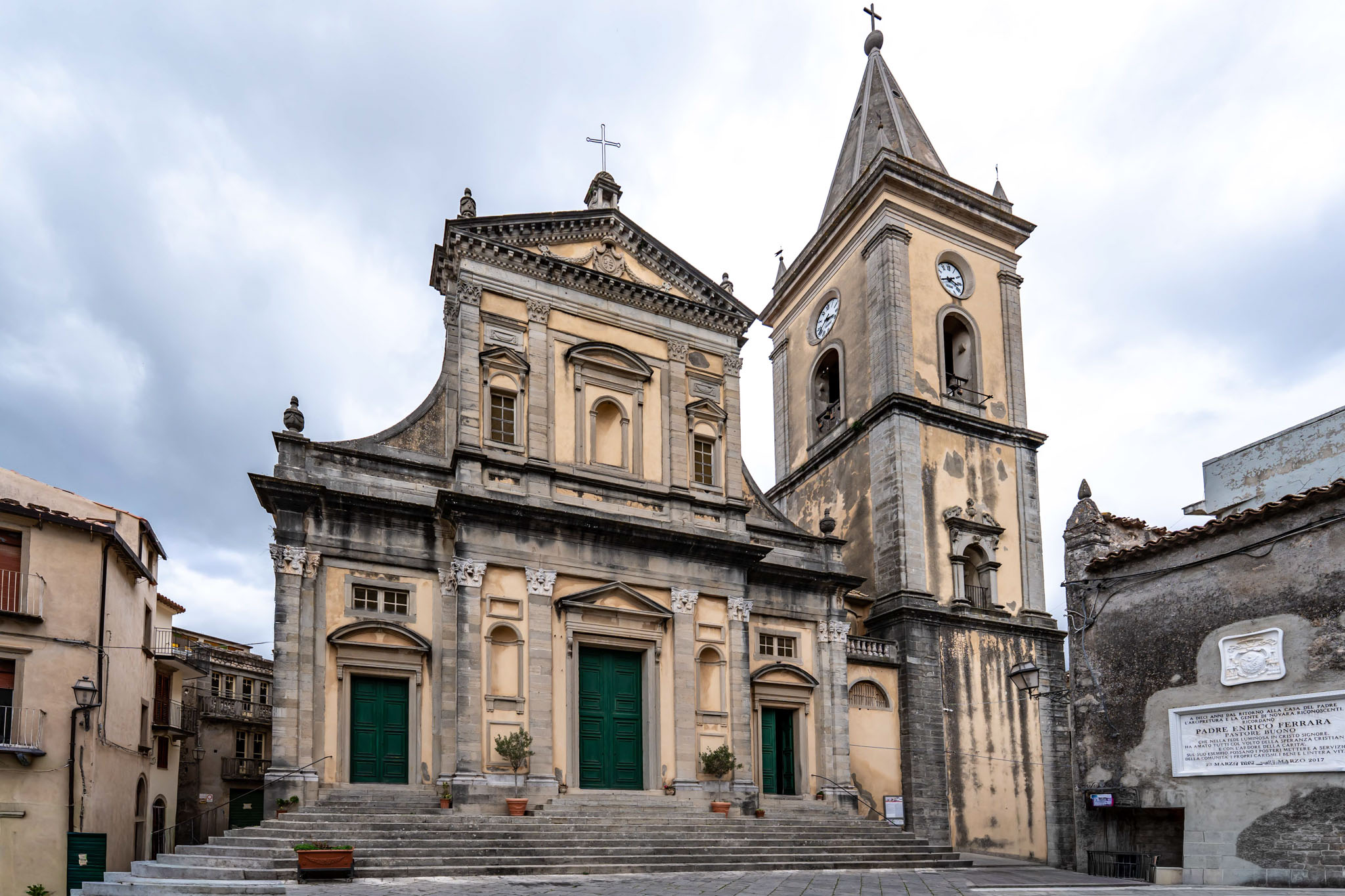
Located at Via Duomo 1, the Cathedral of Novara di Sicilia, dedicated to Saint Mary of the Assumption, is one of the most important historical and spiritual symbols of the village. The current main church was built in the fifteenth century, replacing the ancient church of the town’s original settlement.
Over time, the building underwent various alterations and decorations, which were gradually added until the 19th century. Furthermore, during the Second World War, the structure suffered damage and was subject to modifications in 1948.
Dominating the structure is the imposing eighteenth-century bell tower, a solid “sturdy tower” atop which a spire was added in the post-war period. The bell tower houses two tiers of bells that have marked the town’s time for centuries.
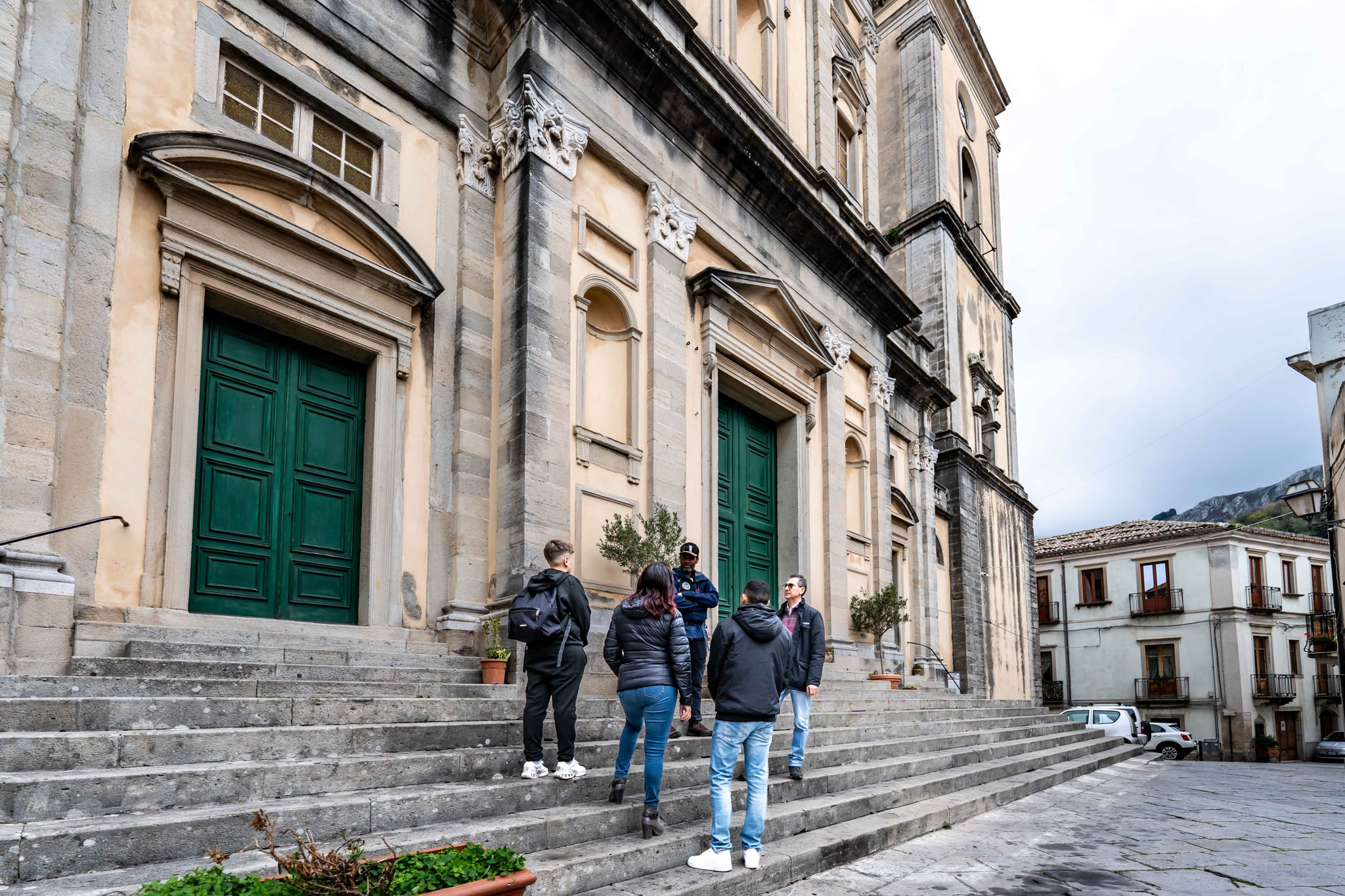
The exterior of the Cathedral is monumental and sober at the same time. The façade is characterised by monolithic columns with Corinthian capitals, elegant arches, and various artifacts sculpted in local sandstone, crafted by local stonemasons.
Inside, the building is laid out on a Latin cross plan with three naves, separated by twelve columns, in the “Corinthian” style. The twelve marble altars, which feature “cipollino” marble extracted from local quarries, contribute to the majesty of the naves.
The crypt beneath the apse housed the mortal remains of archpriests, canons, and vicars until the early 1900s: some mummified bodies are still located inside.
Among the most significant works:
- An 18th-century carved wooden choir.
- The painting titled Lo Spasimo (The Agony) or Caduta di Cristo (Fall of Christ) by Antonio Catalano (1598).
- The painting of the Vergine del Carmelo (Our Lady of Mount Carmel) (17th century).
- The painting of San Michele Arcangelo (Saint Michael the Archangel) from 1737.
- The painting of Santa Venera by Cardillo from 1607.
- A large canvas titled Assunta Incoronata Regina (Assumption Crowned Queen) by Giuseppe Russo, dated 1805.
- A wooden statue of the Vergine Assunta (Our Lady of the Assumption, Patron Saint of the village), a work by the Neapolitan sculptor Filippo Colicci, from 1764.
The sacristy houses three large 18th-century wooden cabinets and a 1570 panel painting depicting the Annunciation of the Lord, by the Venetian artist Francesco Stetera (from the Abbey of Santa Maria La Noara) and believed to also feature a portrait of Saint Ugo Abate, the village’s Patron Saint.
Finally, the Cathedral complex holds a true “Treasure”: silver and gold objects, sacred vestments, a Gothic-style censer, and an ancient Arabic terracotta vase known as the “Jar of Saint Ugo”, which, according to tradition, was used by the saint for the blessing and healing of the sick.
Visiting the Cathedral of Novara di Sicilia means venturing into a place where art, history, and spirituality are uniquely intertwined. The exterior façade tells the story of the skill of local stonemasons and the use of the typical local sandstone; the interior, with its classical floor plan and “cipollino” marble altars, reflects the architectural and artistic evolution spanning centuries.
The works of art housed within offer the opportunity to discover names, styles, and timelines ranging from the 16th to the 19th century, all set within a liturgical context that is still active today. And then there is the crypt, the “Jar of St. Ugo,” the Cathedral’s Treasure: elements that add charm, mystery, and a deep connection to the village’s tradition.
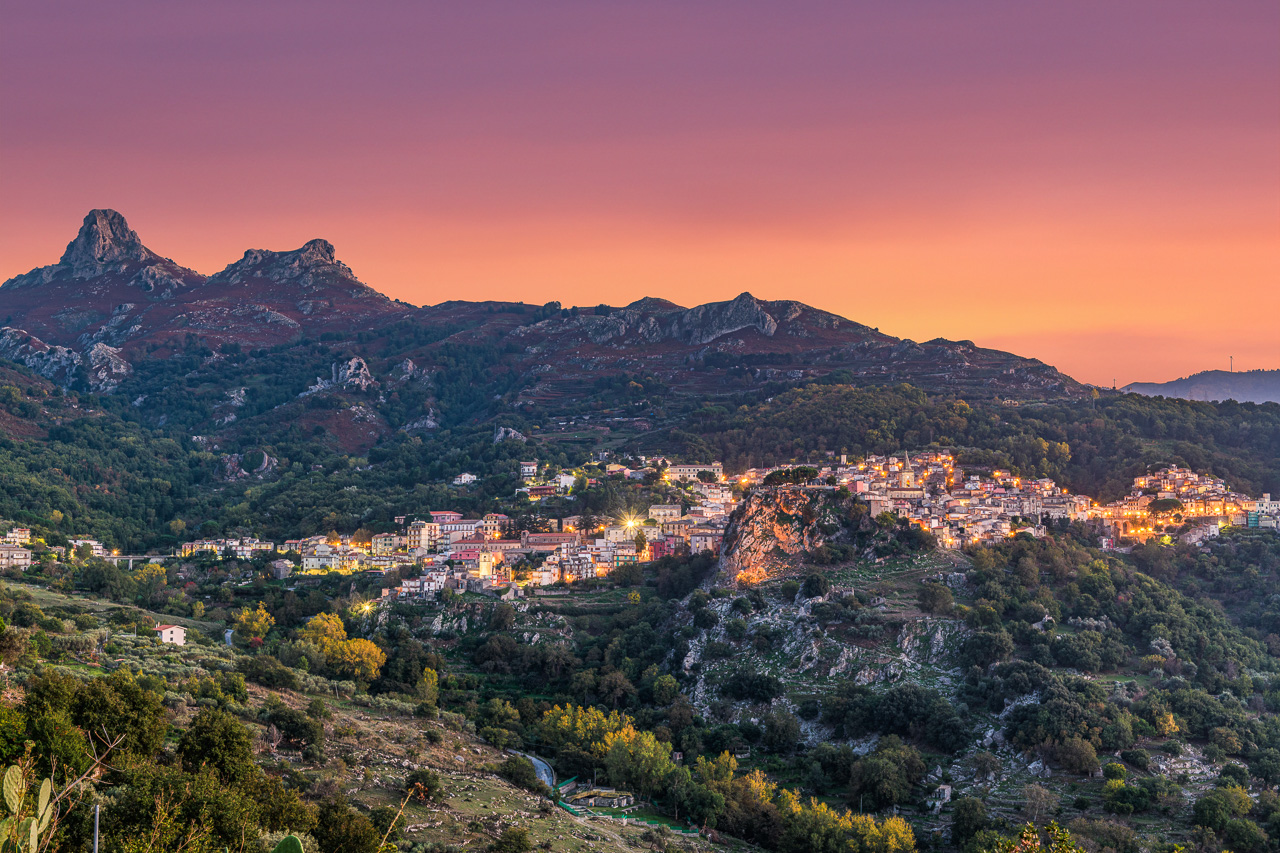
In a splendid village nestled among the landscapes of the Nebrodi Park, a visit to the Cathedral is an unmissable stop for those who want to experience the authentic history of inner Sicily, far from the main tourist circuits. It is a place to pause, observe, listen to the details—the ancient stone, the columns, the canvases—and grasp that sense of continuity between past and present.